Showing posts with label story. Show all posts

Tuesday, December 23, 2008

A Blogmas Carol

CHRISTMAS: Noun, pronounced \ˈkris-məs\. Attributive. Christian festival celebrating the birth of Jesus. The English term Christmas (“mass on Christ’s day”) is of fairly recent origin.Since the early 20th century, Christmas has also been a secular family holiday, observed by Christians and non-Christians alike, devoid of Christian elements, and marked by an increasingly elaborate exchange of gifts. In this secular Christmas celebration, a mythical figure named Santa Claus plays the pivotal role.
Attributed quotes:
~ The Disneyfication of Christianity (Don Cupitt)
~ The one time of year when people of all religions come together to worship Jesus Christ. (Bart Simpson)
~ From a commercial point of view, if Christmas did not exist it would be necessary to invent it. (Katherine Whitehorn)
~ The season when you buy this year's gifts with next year's money. (Author unknown)
~ Roses are reddish, Violets are bluish, If it weren't for Christmas, We'd all be Jewish.(Benny Hill)
~ Have yourself a merry little Christmas (Hugh Martin, Ralph Blane)
~ We wish you a merry Christmas and a Happy New Year (Traditional)
~ I'm dreaming of a white Christmas, Just like the ones I used to know (Irving Berlin)
Have you ever noticed how it's the Concepts, the Characters, the Conversations, the Communications and the Creations that begin with the letter C that are best? All good things come in threes, C is third in the alphabet. The majority of your favourite indulgences begin with it. Comforts. Cake. Compassion. Chocolate. Concerts. Celebrities. Compliments. California. Candles. Charlie Brown. Coffee. Cinema. Cash. Comedy. Christmas. Carols. Cocktails. Cabarets. Candy. Cookies. Cards. Casablanca. Caresses. Cartoons. Campari. Carnal desires. Culture. The Carpenters. Cacophony. Christ. Caravaggio. Jim Carrey. Cadillacs. The Cure. For the Irish, the Commitments, Christy Moore, the Corrs, Cork. It's why I, of the 27 of us, is telling this story. It's probably why though third in, I was first out.

Christmas. This didn't start at Christmas. It was earlier when we were bought, the value of the late 1980s being in the twenty-easy-payments option. Nestled in cardboard we sat side by side, retaining the smell, storing the knowledge. We spoke of distant lands, far off places, new technologies, past victories. Our coverage unrivalled, our colours vibrant. We were more than just a purchase, we were an investment. Unmatched, unequalled, understandably, reassuringly expensive.

We sat in our comfort, confident in our impending release. We were to be pride of place, the crowning glory. We were for Christmas. We knew this. We knew of everything. Everything. Every American president, every population size, every breed of mammal, every work of Shakespeare, every part of a steam engine, one of use would tell you. We whispered together of what was to come. A family gathered. Children educated. Information imparted. We argued sometimes, crticising the others' pessimism, Deriding the others' optimism, belittling others faith but deferring to the index we waited. We learned and waited.

We would hear them outside at times, passing our place in the hall cupboard. Chats. Conversations. Arguments. We heard it all. We were unsure of how many there were to begin with. Sometimes two, sometimes more. Children seemed to be a permanent fixture though some would go to school (S, page 362) while some would come to play (P, page 617). We thought there'd be at least two. When they spoke of something we were unsure of we would consult the relevant text and inform the others. We were to be a gift (G, page 279) for Christmas (me, page 348) and we were to be delivered by Santa Claus (S, page 534, see also F for Father Christmas)
Santa Claus: Legendary figure who is the traditional patron of Christmas in the United States and other countries, bringing gifts to children. His popular image is based on traditions associated with Saint Nicholas, a 4th-century Christian saint. Father Christmas fills the role in many European countries.
~ Aren't we forgetting the true meaning of Christmas? You know… the birth of Santa. (Bart Simpson)
~ I once bought my kids a set of batteries for Christmas with a note on it saying, toys not included. (Bernard Manning)
~ Santa Claus has the right idea: visit people once a year (Victor Borge, Danish born American Comedian and Pianist, 1909-, see B, page 629)
~ Dyslexic demonologists often end up selling their soul to santa. (Author unknown)
~ The main reason Santa is so jolly is because he knows where all the bad girls live. (George Carlin)
and so we waited. We listened and waited.

The door slammed when he came in. It was slamming more and more this school semester (S: American (p.864), Term (T:UK and Republic of Ireland) (page 436)) at this time. Sometimes late, sometimes much later. We listened when he lost his shoe (See F, footwear, page 723) to the bullies (B, page 867). We heard the questions about his uniform (U, page 516) being torn, his belongings stolen. We heard the accusations and denials, the scepticism at his explanations, the emotion in his voice as he endeavoured to explain. His quietness his handicap, his shyness her excuse.

There's something wrong with you, she told him. You're not right.

After coffee (me, page 682) with neighbours sometimes she would ask jokingly if she could give him back. His sister wasn't this much trouble. It seemed she owned him and he owed her. She didn't seem satisfied with her purchase, comparing him to other versions, to previous expectations, to those she saw, with better veneer, presentation and style. There was something wrong with him. Though inanimate we somehow drew tighter listening, afraid the same accusation would be levelled at us. What if we became obsolete, weren't wanted, didn't fulfill the criteria? What if there was to be no place for us?

He who had bought us would try reason with her sometimes. He's young, He would say. It's that age. It's hard for him. He'll grow out of it. He'll be grand. He would come and look at us sometimes, removing the cover, running his hand along the spines, pride in his decision emanating from him. Not long now, he'd whisper. She threatened to burn us, to sell us, to convince him he wasn't worth it, he'd have no use, no interest, no respect. He'd ruin it us like he ruined everything. Sure wasn't everything he had broke or thrown out or given away or wrote on? What did he have to show for it? Sure it was no wonder he didn't have friends, look at the state of his room, the state of his hair. Who knew what he got up to. He doesn't think we can see.

People, she told him, are talking about us. Because of him.

We would hear from the Television (T, page 314) about the other toys, the possible alternatives. Something called the Atari (not in me said A, mustn't exist), the Action Men, the Transformers, the Meccano (M, page 243) the Casio keyboard, the Castle Grayskull. From time to time He would suggest one of them. She said no. The boy never asked, though enthused with friends about the commodore, the Ghostbusters, the board game called Operation. The girl in the house wanted Barbie and My Little Pony and Baby New Born and Pound Puppies and a surprise. We knew she was younger. We could tell.

The door slammed. The boy came in, hanging up his coat, kicking off his shoes, turning for the stairs. So come on, tell me then. Why haven't you asked for stuff from Santa? she said, not greeting him. Is it cos you know you don't deserve it?

We couldn't hear his response. Mumbling again she said, Just speak. Why can't you speak? What's wrong with you?

I know there's no Santa he said louder. I know it's you and dad. I don't need anything.

What did you say? she screamed at him. You little bastard. You ungrateful brat. Coming in here with your lies. You think you're so clever. So smart. One up on your parents. Don't ever forget where you're from. What we did for you. Don't you dare say anything to your sister. You'll ruin it on her like you ruin everything else. I see what you're doing. Get out. Get out of this house.

He left without food, without his jacket. We heard. He almost rang. She lifted the telephone (T, page 344). Dialled the number, we heard the dial turning. She spoke to Eileen, the woman down the road. She spoke to Carol, to Laura. Telling him of his cheek, his screaming, his slamming of doors, his swearing, his running when she tried to console him. When He came home she told him that he'd come in shouting, threatening to tell the young one, going to cause a fight if he didn't get what he wanted. We won't be blackmailed by him she said. We won't be held to ransom. Don't you be blind to what he's up to.

He went out.

Several hours later - we counted the ticks from the wall clock - he came back with him. Quietly entering, he sounded weary, sounded sad. Sounded disappointed. Look, I'm not saying you're a liar, I'm just saying you must have said something to get her so worked up with you. No, I don't know, you'll have to think about it. Just calm down a bit. Try and be good. Say nothing to your sister. Just try, will you? Here, give me a hug and go to bed. The boy's footsteps up the stairs bore no youthful bounding or happy creeping sound. Just a dull thud as he threw one foot on the other, the noise of his walk across his bedroom floor, the sigh at collapse on the bed. We maintained our objectivity, our independent perspective. We recognised his despair. (D, referenced as definition, page 232).

They didn't speak for a while.

Time moved closer to Christmas. Songs on the radio. Late Late Toy Show ("I'd give it a five out of ten, Gay, because the doors fell off"), new Star Wars film on the TV. The door to where we sat opened more frequently for coats, wrapping paper, decorations, hiding. The young one was excited. She was ready for Christmas, for presents. She was brought to see Santa. She was bought new clothes for Christmas. She was in a school play. She got to write a list. You're a great girl her mother said, you can have whatever you want. Her father asked her not to be greedy, to think of others. She ran like a whirlwind (see T, tornado, page 965). The boy watched what he had never had. He wrapped her presents without complaint. He had not asked for anything. He wouldn't get it.

'Twas the night before Christmas
And all through the house
Not a creature was stirring
Except the boy. She had wanted to go out. Wasn't it enough they got their presents she said? Don't we deserve to go out? Does it always have to be about them? You never bring me anywhere. You don't care. You're so boring. She got her way. Look after your sister, son, He said. We'll try be back early.

What about the stuff, da. the boy said quietly, not wanting his mother to hear.

What stuff, son? He said.

You know, the Santa stuff? The milk and carrots and the letter?

Ah we don't need that, do we? He said, almost running out the door as She started beeping the car horn. We'll do it later.

Footsteps into the kitchen. Footsteps out. Footsteps in. Brush and hoover heard. Christmas tree plugged in for the first time - Leave it off so we won't have a bigger bill than the one you put on us, she had told him, tinny music playing as they flashed. Light off. Footsteps up stairs. Soft knocking. "But I can't. Mammy said go to bed. Santy won't come if I go down. He'll think I'm being bold!" came the young voice. "Just come down for a minute. It'll only take a minute." he pleaded. Running downstairs. Now, see, he said. Milk and biscuits for Santa. Carrots for the reindeer. The fireplace is clean. Everything's good. You go up to bed and when you wake you'll have loads of presents.

Ah that's great, isn't it? she said. Mammy and Daddy are really great to do this. They said they would.

She ran up the stairs as if her young life depended on it.

He turned off lights, closed the door, went to his room. Radio on low, Band Aid's second single. He sat on the bed. We could hear the creak.

Hours later parents returned. She pushed her way past him at the door, telling him he shouldn't have been worried about coming home, sure it was only a day. She went into the front room. What's this shite? she said, Did he put this mess here? Did he? Is he trying to be better than us? To tell her I didn't do it? To turn her against me? The words stumbled out, blurred by alcohol (A, page 344), while he, placating her, hoping she wouldn't wake the children said No, no. I did it before we went out. It wasn't him. I'll get the presents out of the press. You go to bed.

You better not have got anything for him. d'ye hear me? He doesn't deserve it.

I didn't. Now you go on.

Front door opened again. He returned from the car with packages. He opened the door to where we were and removed more packages from behind big boxes and under old coats. We felt him lift us, but put us down again, removing something from behind us. All this for one girl he said almost under his breath. All under one tree.

Light footsteps down the stairs.

Are you okay da?

I'm grand son, what are you doing up?

I waited for you to come back. I wanted to see if you needed a hand with Emer's presents. Do you want me to do them?

No, you're grand, son. I have them all done. Look, they're under the tree. She'll be delighted that Santa came. Thanks again for wrapping them.

No problem, dad. I hope tomorrow will be a good day. I hope Emer enjoys it.

You're a good boy, you know that?

Footsteps up the stairs.
You better watch out, you better not cry, you better not pout I'm telling you why. Santa Claus is coming to town.
(J. Fred Coots, 1934)

She bounded out of bed. Out of her room. Into the boy's room. Come on, let's see what we've gotten, Come on, come on. Footsteps down the stairs. What do you think you got she asked. Do you think I got roller skates? What did you get? Did you get anything? Did you get nothing because you're bold? I don't think you're bold but mammy says you are.

Words rushed from her mouth as they crept downstairs. Experience had taught them that too much noise this early wasn't tolerated. Sitting room door opened. She screamed and ran for the tree. Footsteps down the stairs.

Look what I got, look what I got! She exclaimed, the sound of ripping paper making some of our lesser used volumes nervous. Father and son reunited in the doorway, watching.

Oh look! she said. Oh look! she said again. Look at it. I'm going to show mammy.

Tiny footsteps up the stairs again.

Well that's it, the boy, said quietly.

Well, what about the box? his father said

What box? That big cardboard one? Isn't that the box from her toys? Sure She told me I'm not getting anything.

Well why don't you look and see?

We could imagine him peering at the box, looking at where we'd been carried to the night before, looking at where his father had scribbled his name hurriedly in the dark.

Is this mine? What is it? his youthful excitement apparent in his breaking voice.

Open it up.

Light. More light than we'd seen since we were taken from the salesman's car that day. Light and a room and a boy. Looking. Not believing. Not daring to touch. Not wanting to believe.

Oh wow. Are these mine? Really? All for me? he asked. Really, all mine?

I was the first book he opened. I was the first one he saw. I was the third encyclopaedia but the one that could show him Canada and Caterpillars and Caius Claudius Nero and China and the Caddis fly and Cadmium and Cairo and Caesar and CS Lewis and, of course, Christmas. Just like his dad just had.
~ The only real blind person at Christmas-time is he who has not Christmas in his heart. (Helen Keller)

~ They err who thinks Santa Claus comes down through the chimney; he really enters through the heart. (Mrs. Paul M. Ell)

~ Remember, if Christmas isn't found in your heart, you won't find it under a tree. (Charlotte Carpenter)

~ Maybe Christmas," he thought, "doesn't come from a store. Maybe Christmas... perhaps... means a little bit more."
(Dr. Seuss (1904-), American author of children's books. From 'How The Grinch Stole Christmas')


Happy Christmas.


T, page 342. : Teddy Bear: an enduring, traditional form of a stuffed animal, often serving the purpose of comforting children. Name originating in 1902. In recent times, some teddy bears have become expensive collector's items.

Sunday, October 05, 2008

Another Saturday...

Story links: Intro | part 1 | part 2 | part 3 | part 4 | part 5 | part 7

Walking down this road I wonder once again how I could be silly enough to forget to charge my iPod the night before. It goes everywhere with me, certain songs like old friends, certain lyrics companions and evocations of memories I’ve been using to shield myself from the world. I’m consoled by the knowledge I’ll be there soon, that I’ll see her, that we can spend some real time together. The way I’ve been feeling recently healthwise is difficult to explain to anyone – part of me is afraid it’s all in my own head, that there’s nothing wrong with me.

It was partly this that caused the distance between us, both physical and emotional. She wanted to help. I didn’t know how she could so I didn't let her try. I was surprised she put up with me, for all my words of emotion, of connection, of being intrigued and enthralled. I was delighted to get a reply from her when she came back from her holidays that seemed to indicate she was excited about seeing me. That’s what tonight would be about. I hoped we’d be able to spend some quality time. I’d missed doing that.

I’ve always liked walking around different parts of Dublin, especially places I rarely get to. Thomas Street, the Liberties, The Coombe, Kilmainham, on towards Inchicore, Rialto or Crumlin have always been places of fascination – a glimpse of old Dublin overlaid with the multicultural city I’ve chosen to make my home.

I always tend to compare it with London, a city I’d move to in a heartbeat given the right circumstances. Even streets like this one, old style houses a stone's throw away from the hustle and bustle, the cafés, the Luas line and the madness hold their own charm, despite it being just an ordinary council estate, a short-cut to her house.

In the absence of music I listen to the sounds of the streets, the traffic, the TVs blaring, the conversations over fences. Here’s a part of Dublin that hasn’t lost all its focus on people – mothers chatting to the neighbours, old folk having a natter on the corner and children playing on the road. It reminds me of home and contrasts sharply with the anonymous neighbourhood I now live in.

Someone is calling up a stairs in the house I pass. “Are you okay up there?” a voice enquires, followed a few seconds later by a faint “Yeah, I'm fine”. My own mother’s yell up our stairs would have pierced soundproof lead-lined bunkers. No matter how loud I had music on, no matter how deeply asleep or engrossed in a book I’d be or how far into the computer game; when that woman wanted my attention, she knew how to get it. Before I appreciated the lifestyle she led, almost housebound due to mobility and illness issues, alienated from friends and neighbours due to small town politics, backbiting and bitchiness, I resented these intrusions. I was in my room, my control centre, my haven. Why bother me for something as mundane as going to the shop for milk? I was saving the world up here – or at least saving Roland On The Ropes.

The older I got though, the more I realised her reliance on me was a mark of respect, of trust and I became happy to help, no matter how captivating the book or high the level. I realised I missed her. I always do in the evenings. I smiled, looking up at the house that had prompted the good feeling inside me, wondering if, behind the net curtains was someone as happy as I was right then.

The sun had started its decline behind the trees of the Phoenix Park in the distance. I checked my watch, quickening my pace. I didn’t want to be late this time. I’d brought a bottle of wine in my bag, spending ages choosing a nice label, one that showed I’d put a bit of effort in. I’d decided not to do the whole shirt and trousers thing either – based on her feedback I was in jeans and the innocent t-shirt she liked. It felt peculiar – I’m not very fashion conscious but I do like my appearance to convey a certain image or representation of me. Even on the days I don’t work, I’m happier with a shirt on. I'm rarely aware of what’s cool, hip or trendy so I just dress in what I know, rather than what apparently suits me. My shopping habits continued to be variations of the same style except for the rare occasion someone would come with me. Gifts of clothes were always appreciated, though I’d look at some of the things Aoife would pick out and say “Really, you’re serious?” She always was and they tended to always suit. I’m never in the mood for clothes shopping – in and out of Penneys with shirt, trousers, socks, boxers, top. Sorted, and usually under 60 euro. Me mammy would be proud. Herself less so, though she’d never said it outright. I liked that about her.

I liked a lot about her to be honest. I’d missed her while she was away. I didn’t think I would – I never gave her a proper, concrete impression. Wrapped up in worries about illness, afraid of committal, engrossed in others more than her or myself, I’d managed to give her an idea that I didn’t like her, that I didn’t want to spend time with her, that she didn’t matter to me, when, in fact, she mattered so much that it was scary. I thought by not moving in any discernible direction I was doing the best thing for all concerned, when I was only making things worse and solving nothing.

No matter what else I knew that my friends would want to see me happy. I was delighted by how easily she was accepted into the circle, how much they liked her and were happy for me. We looked good together. Fine, there were issues, but sure aren’t there always? Nothing I wasn’t prepared to overlook, to overcome, to work through. I liked her, she liked me. I wanted to keep it that simple.

It really was hometime now. Cars were pulling into driveways, porch lights being switched on in anticipation, the Centra on the corner full of people grabbing the Herald, the milk, the cigarettes or pizza for the evening. I wondered what she’d cook. She’d been flirting with the idea of veganism, her commitment to the environment and to conservation becoming a bigger part of her life. I had a hankering for pasta and pesto, as long as it wasn’t the red stuff. There are certain things that even the best vegetable mix can’t mask and that for me is one of them. The taste rose in my throat. I fished for and found the mint tic-tacs I’d stocked up on in Lidl last week. Feck it, if nothing else at least my breath would be okay.

The last few yards found me slowing down. I was early enough to be considerate. I stood in on the pavement, allowing people to pass. Children ran around with bonfire materials, cyclists whizzed by, car radios could be heard through windows. Catching an echo of U2’s 'One' caused a smile. I gave myself the once over, checking the clothes were okay, wiping the shoes in the grass, tossing the hair a little, swallowing a couple more tic-tacs.

It had been ages. We’d arranged this meeting by text and SMS is always a tricky medium to judge. Meanings can be lost, messages misjudged, motives questioned unnecessarily. Was it too late for me to tell her I wanted her in my life and not just as a friend? Was that what she wanted to hear? Had time, distance and new surroundings changed her outlook, given her new priorities and ideas? Had she met someone else? As I walked up the steps to her front door, I resolved to accept whatever she’d say, but to hug her when I saw her tightly, as if that would make her know how I felt and say what my words probably wouldn’t convey.

I rang the doorbell. Someone came down the hallway.

Monday, September 29, 2008

She came home to meet my parents

I'd met her in a crowded room.

Beforehand, I never really thought I could have someone like her in my life. To be precise, I'd never envisage it because I wouldn't presume it could happen. Before I'd ever met her, I knew about her. Her name would come up in different circles, among new friends I was making, in discussions I was having.

Everyone who knew and knew of her cared deeply about her. She was obviously someone out of my league, in a different circle, someone I could only admire from afar. She didn't know a thing about me. Why would she?

On the recommendation of someone I had trusted for a while, I started to read some of her writing. I was only flirting with the idea of blogging but had issues about finding my own voice, the subject matter important to me and how to balance the personal and professional side, giving due attention to both.

Her stories came highly recommended - she was widely acknowledged as someone with the ability to use the right words at the right time. She had an art to composing her posts, which, though personal was accessible, something to connect with. I felt I had an insight into a life I'd never lead.

Truth be told, I was nervous about meeting her at all. She had a loyal set of followers who would jump to her aid if she needed it, or defence on the rare occasion it might seem prudent. She was prolific, uncompromising in her style and well respected in a community I felt I was peering through the fence at, longing to be able to join in the fun.

Yes, fine, she was only a person, but she was a person doing well what I desperately wanted to, but didn't feel confident enough to. It was irrational, but I tended to be tongue-tied in front of anyone I thought was great, no matter what the reason, and I normally left a not-as-good-as-it-could-be impression.

I knew she'd be in the bar that night - I sat with friends having a pint, wondering how I'd react when I finally saw her in person, as shy and gauche as I felt. I masked it, feigning confidence, bravado and my usual manic niceness. Still though, in the quiet moments my knees knocked. What impression was I making?

As soon as she appeared she was surrounded by her friends, her admirers. I desperately wanted to be able to go speak to her as an equal, as someone I could confidently approach. Instead I knew all I'd do was gush in admiration, while fearing the rebuff I deserved for not being part of the group. "Who are you?" was the question I, in my naivety, dreaded.

However, as the night went on, emboldened by drink and the convivial atmosphere, I ventured shyly over to make a proper introduction and say hello. She was in a good mood and I seem to have caught her at the right time, though those with her were obviously puzzled by this over enthusiastic and slightly strange person coming over to almost worship at their companion's feet.

Afterwards, I was puzzled by my hesitance - she was as lovely as I'd thought she'd be. How could she not be? I came away elated, though sure that I'd be only one of the many people she'd encounter that night. I thought she'd forget me.

But she didn't forget.

When I began my own blogging - stepping away from the sidelines and venturing in to kick the ball to the others, she encouraged and supported me. Her advice was always welcome, her challenge to me to keep going, to improve and to do like she did - promote, educate, entertain. As any relationship starts, it stared with a smile, a shared joke, a connection and as it deepened we both developed it to our benefits.

We'd meet up when we could. It wasn't always practical due more to geographical than personal circumstances but an email I'd sent almost cheekily chancing my arm became a reality I hadn't expected. We met of all places in a drive-thru McDonalds before sharing a coffee and a chat in my kitchen. She likes to remind me in front of her friends that I asked her to strip and change clothes on the first time in my house. Can't blame a guy for trying!

We'd connected. We shared a sense of divilment, of laughter and an appreciation of the simple joy of being able to walk around somewhere like Dublin Castle, the Chester Beatty library or the city centre. Our first meal together was interrupted by Gerry Adams and Mary Lou McDonald.

We each encountered old friends while out. Our affinity was evident, our mutual affection a source of smiles. No one openly questioned us, though obviously seemed surprised someone like her would choose to be with me. I didn't care, I was happy. We were friends.

When times got serious with my health recently she again surprised me with both great solace and practical guidance. She remembered hospital appointments, days the results were due and texted me on both. I was consistently impressed and elated she'd choose to spend her thoughts on me, despite having so much else on. Friends I've had for years weren't as considerate. She taught me a lot.

This weekend we ended up in the same place, near enough to my home town. Throughout the day I hadn't much chance to speak with her - brief encounters between commitments or conversations were all we had. It came time to go home. I wasn't sure when I'd see her again and I knew I'd miss her. So on a bit of a whim I interrupted the conversation she was having with her driving companions and said "How'd you like to stay overnight in my home and meet my parents?"

My parents are important to me. I consistently tell people that they'd never know the real me and my origin without meeting them first. It's practically the separation between acquaintances and friends. I didn't know how they'd react to me calling to say "do up my bed, please" for a woman they'd never heard of, never mind met before, but they're used enough to me now to know that it's only the important-to-me people I'd choose to inflict on them introduce them to.

There was a moment's silence after I asked her, then she burst into laughter, asking me to repeat it to her most trusted friend. "What would people think?" she laughed. I smiled along, though with fingers crossed, and realising it might not be the most opportune time, left her to discuss the idea with those around her. I rang me dad - "no problem, I'll do that" he said, without asking who or why. I suppose he was a bit surprised to hear someone else was coming, Niamh already spending the weekend but he chose not to ask.

"I'm all set" she said with a smile, as we bade goodbye to her companions, them nudging and winking to comic effect. "You're all right, she's on the pill" was roared at me across the room, turning me a deeper shade of crimson than the carpet I was standing on. Still, I knew I'd be expected to be on my best behaviour. And sure why wouldn't I be? After a meal and a drink (or three) we set off on the 40 minute journey.

The conversation in the car was pleasant, if slightly strange. For some reason I felt the need to warn her not to expect too much. Again, this wasn't important to her - I think she knew I was inviting her to deepen the relationship, almost as testament to how I felt about her in my life.

We drove through the Kilkenny countryside in the darkness passing familiar landmarks, each evoking a memory I felt prompted to share. I was nervous. I talked too much.

As we pulled into the drive I felt the same nervousness as I did when I brought Aoife or Natalie home for the first time. What would she think? Would they be okay? Would I be?

It was almost 10pm when we arrived. As I opened the side gate to let Niamh and her in, Lucky came out, tail wagging to greet the newcomer. The kitchen lights were on, my parents ready to greet the guest, to say hello to my friend, whoever they were.

"Hello", I said as I opened the door, "how's you?" I turned to her. "Welcome to my home. These are my parents" and to my parents I said, almost sounding ceremonious or scripted "I'd like you to meet a dear friend of mine. This is Marie."

And that's how Grannymar came to my home this weekend and met my parents.


We had a lovely time.

Friday, June 20, 2008

Have Pride in who you are

"Doyle, you're a pansy!!"

That's the second insult I remember being hurled at me when I was growing up. I was a pansy. Not the small colourful flower in gardens but "one who lacks the appropiate masculinity associated with testosterone; someone very pathetic and wimpy, generally used as an insult" as urbandictionary says. That was me. A pansy.

From the age of five or six, my life was defined by that term. Growing up in the small town that I did where everyone knew everyone else, social standing was important but fitting in was even more. If you didn't go out with the boys playing football, if you didn't follow the crowd or if you weren't "up for it" then you were different and that was bad.

My mother was 39 when she brought me home to no. 33. I was very ill as a child and she nursed me back to health despite a myriad of doctors advising her to accept the inevitable. I have quite a stunning letter detailing some of my illnesses including whooping cough (pertussis), respiratory problems (necessitating months between Cherry Orchard and Crumlin Hospitals), gastroenteritis, dermatitis, eczema and anaemia all in the first 10 months of my life, which made it a bit difficult to thrive. An allergy to all dairy products, a weak digestive system meaning I couldn't hold down food (or travel) and a stubborn Leo streak can't have helped.

But my Mam is a stubborn woman, and having waited so long for a child (she was married the year before) she wasn't going to let me go. With her constant care and attention as well as being tended to by as many doctors as she could find and afford on my father's meagre labourer wages, I survived the illnesses to become a happy wee child - admittedly an odd looking young fella, a big head and a little body (because of the lack of early nourishment) so I was a bit like a lollipop.


And so I grew, with my younger sister, in an estate full of children all in and around our ages. My mother, coming from a large family and having immense pride in her new children made sure we had everything we needed (without spoiling us) and showed us proudly to the neighbours and her siblings. She had been a good daughter to her mother (who she left school at 13 to mind until she died in 1976) and now was going to be a great mother to her children.

Looking after me of course also meant protecting me from harm. Being "fragile" I couldn't go and play football in case I got hurt. I wasn't allowed off on my own in case I got sick - I was a clumsy child and fell (head first) against walls and columns, off pavements and generally just over a lot. The first time we went to Knock as a family we were on the way to the shrine when I fell and broke my nose, so straight back to Galway with us.

I didn't have the same social interaction as some of the other children who went off with their siblings and cousins - my cousins were a few years older and in fairness would have been killed if anything had happened to me. So I spent time at home with my mam, who looked after me and taught me to read and write when I was very young. And dressed me in the height of fashion.


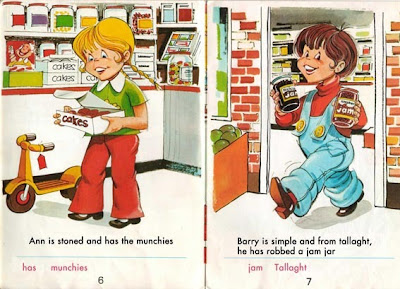
Because I spent so much time with her I was far more used to adults than I was to other children. The grown ups were fascinated by this little kid who could read big words in the newspapers, who knew who the Taoiseach was and who had aspirations to be a professor (though I suspect my mother had a hand in this). At times when children were reading Ann and Barry I was racing through the Three Investigators, the Famous Five and heading towards Narnia.


"Doyle, you're a pansy!" As the crowds of youngsters passed while I was playing with my sister outside, this became a chant. "Mammy" said the six year old me, "what's a pansy?" "Don't mind them, they're just jealous" I was told. And I accepted that. While they went off strengthening muscles, learning hand eye coordination, social interaction, learning to be insulted and take it and other skills on the GAA field, I was learning about BASIC, code and driving a formula one car around the track on my Amstrad CPC 464. And was happy to be so.


Image from Retro Treasures

A pansy, a cissy, a mammy's boy, a wimp, a girl - as I stumbled through primary school these terms were levelled at me. I was definitely gay. Not homosexual gay, but different gay. Gay because I liked to read and I didn't know who the captain of Man Utd was. Gay because I didn't go to the local discos. Gay because I couldn't catch a sliotar or kick a ball in a straight line or because I didn't know about the offside rule. A gay pansy cissy.

I don't mean to make myself out to be persecuted here. I had great friends and relatives who made sure I wasn't totally insular. I went to school, was enrolled in the Beavers and did all of that but I was a child who listened to what was said. My mammy said I was special and better than the others so I acted like same. My mammy said I was to ignore them because they didn't know what I knew or weren't as intelligent as me, so I acted like same. I was a damn annoying child as well with a formidable mother so it became easier I think to just ignore me.

But they said I was a gay cissy pansy. I listened to that as well. When I was enrolled in Mensa at seven my mother blasted it from the rooftops. Proof she was a great mother. Proof her son was different. Other people listed to that.

It's not easy growing up for anyone. We all have stories. I was a child far too sensitive to criticism, far too dependent on acceptance and being liked, far too demanding of the spotlight without doing anything to deserve it. Slowly but surely I withdrew into my room, leaving only for secondary school and mass. I was still small for my age at 13 - this conversation happened in my first week in first year:

Guy in my class: Hey, I just wanted to say, you know, that I really admire you. I think it's great.
Me: Eh, oh, thanks. For what?
Him: You know for being here, for getting in and everything. Your parents must be proud.
Me: Oh they are, very. Yeah.
Him: Cos it can't be often a seven year old gets into first year. Good for you.
Me: Seven? I'm 13!
Him: Really? And you're that small? I heard you were 7...
I was an easy target. I was used to wipe blackboards, to be placed in bins, to be locked in rooms. Because I was fragile my mother thought it best I didn't do sports in the first year, so while the lads ran around pitches developing muscles and rapport on the field, I was on the sidelines, reading, being different. I hated the changing rooms because I felt so different, so small, so underdeveloped compared to everyone else. I was ashamed of who I was. Being a bit of a nancy boy. A cissy.

I floundered through secondary school, awkward, insecure, annoying. I tried to mix but failed miserably. Girls were a complete mystery having been in all boys schools for the past eight years and so I was an easy target for ridicule. Having a big head, big ears, a big nose, a lisp and properly pronouncing my "TH"s all were up for grabs. At the time I had been reading a lot of religious books so I felt I had a vocation. I felt different.

But was I gay? Were they all right all along? Was it because I was homosexual that I was frail, that I was awkward, that I felt different? You're told something often enough you start to believe it and I wondered. Because I didn't have any friendships with girls I formed close relationships with male friends. Nothing sexual but I was quite dependent and needed acceptance. When I didn't get it I withdrew even further.

I became a Boo Radley figure, only seen running through the town early morning in an effort to not talk to anyone. I was pale from the darkness. Illness had followed me. All I wanted was the comfort of my room, my books, my writing, my solitude. I wanted to hide my difference. I couldn't accept who I was because I didn't know.


Over 10 years after leaving home, as I sit typing this, I can't help wanting to give that kid a hug, to tell him it would all turn out far better than he'd ever believed possible, that labels didn't matter and just because they said it didn't make it true. That he'd have amazing friends who loved, accepted and respected him, that he'd have loved and lost but at least he'd loved, that he had so many great opportunities and that he was trying to make the most of his life, his talents and his skills.

I'm going to strip naked with hundreds other people tonight for Spencer Tunick. Like so many others I'm putting the "traditional" need to be ashamed or embarrassed about who I am, how I look and being better or worse than anyone else behind me as I join the masses in welcoming the Midsummer sun over the port of Dublin.


Tomorrow the Dublin Pride parade, now in its 25th year, takes place, and others who have felt they're different, who have been bullied and persecuted, given labels like dyke, lesbo, faggot, queer, perverts, poofs, homos and worse all for who they are and how they were born and who they choose to love take to the streets to celebrate being themselves, being just the same as anyone else, being alive. Being proud of who they are. As they should be.

As I am of who I am
. It's taken a long, long time. But here I am. This is me. Hiya. :)
If you were gay, that'd be okay
I mean 'cos hey, I'd like you anyway
because you see, if it were me,
I would feel free to say that I was gay (but I'm not gay).
For anyone out there who may feel different and think that's a bad thing, it's not. Trust me on this. Be proud of who you are. Enjoy being you.